
That approach no longer works.
Today, regulators, auditors, cyber-insurance providers, and boards all expect organizations to actively understand, document, and manage IT and cybersecurity risk on an ongoing basis. Risk assessments have moved from “nice to have” to essential.
The challenge? Many organizations still aren’t sure what a risk assessment actually is, what it should include, or how it fits into daily operations.
Let’s clarify why risk assessments matter, what regulators expect, and how they help regulated organizations stay secure, compliant, and prepared.
What a Risk Assessment Really Is (In Plain English)
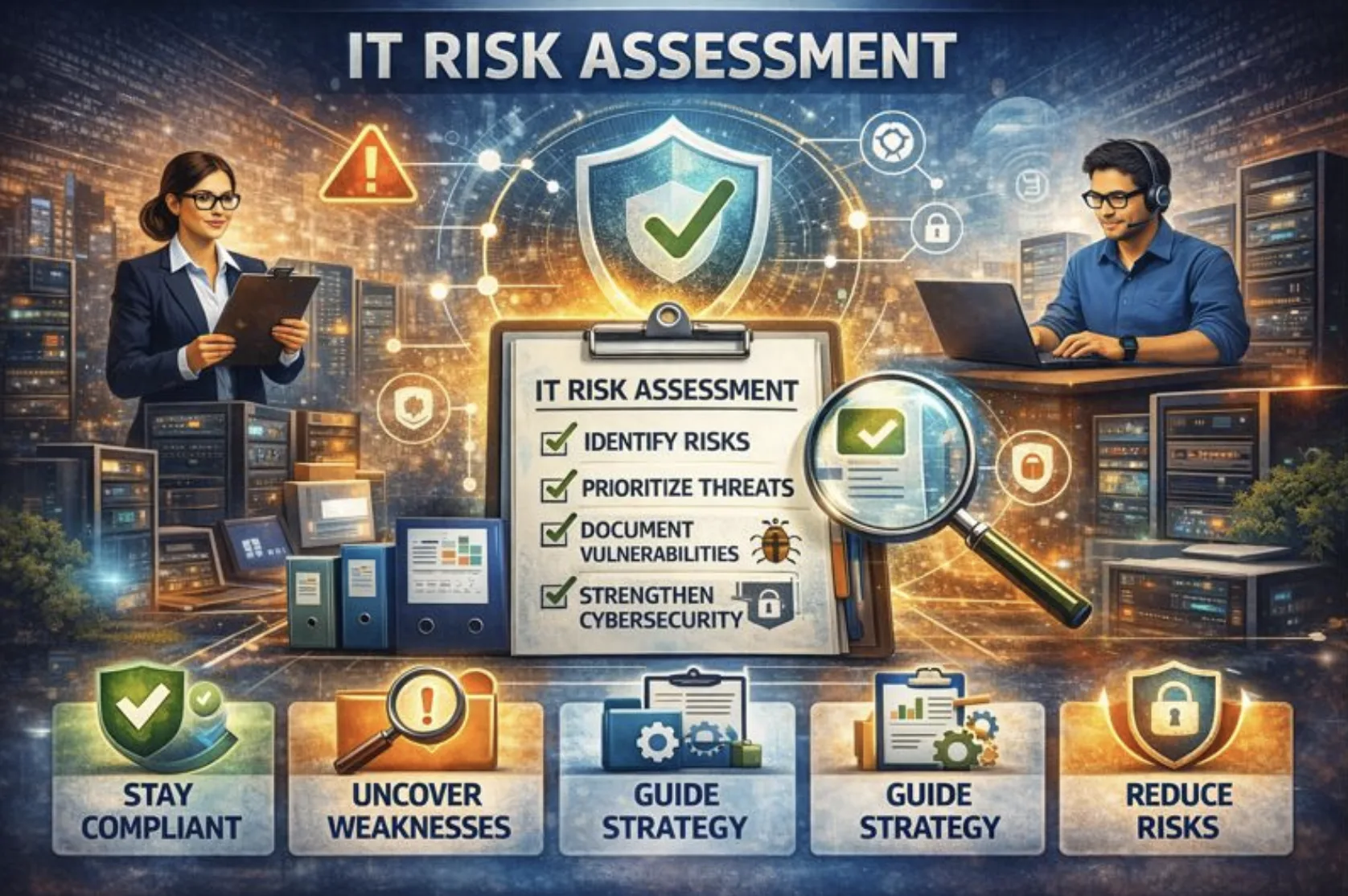
At its core, an IT or cybersecurity risk assessment answers three basic questions:
- What could go wrong?
- How likely is it to happen?
- What would the impact be if it did?
This isn’t about predicting the future—it’s about understanding where your organization is most vulnerable so you can make informed decisions.
A meaningful risk assessment looks at:
- Technology
- Processes
- People
- External threats
- Internal weaknesses
It provides leadership with visibility instead of assumptions.
This builds directly on the proactive mindset we discussed in our February pillar on what managed IT services really include—risk assessments help ensure prevention, not reaction.
Why Regulators Now Expect Risk Assessments
Across regulated industries, expectations have shifted.
Regulators increasingly ask:
- When was your last risk assessment?
- What risks were identified?
- What actions were taken as a result?
- How do you track progress?
A risk assessment that sits on a shelf doesn’t meet these expectations.
Instead, regulators want to see:
- Evidence of ongoing risk awareness
- Clear prioritization of risks
- Documentation showing mitigation efforts
Common IT Risks Regulators Care About Most
While every organization is different, most assessments focus on a common set of risk areas.
1. Unauthorized Access
Who can access your systems—and should they?
Risks often include:
- Excessive user permissions
- Shared accounts
- Weak password practices
- Lack of multi-factor authentication
These issues tie directly to the concerns outlined in our January blog on why passwords alone aren’t enough.
2. Data Loss and Ransomware
Data is one of your most valuable assets.
Risk assessments evaluate:
- Backup reliability
- Recovery time expectations
- Ransomware exposure
- Data handling practices
Without a clear understanding of these risks, organizations are often caught off guard when incidents occur.
Not sure how well your data is protected today? Schedule a cyber risk assessment.
3. Downtime and Business Continuity
Downtime isn’t just inconvenient—it’s a risk.
Assessments examine:
- Single points of failure
- System dependencies
- Recovery readiness
This connects directly to the financial and operational impacts discussed in our February post on the hidden costs of downtime.
4. Patch and Vulnerability Management
Outdated systems remain one of the easiest entry points for attackers.
Risk assessments help identify:
- Missing updates
- Unsupported systems
- Gaps in patching processes
These are often overlooked in reactive, break-fix environments, as highlighted in 7 signs your business has outgrown break-fix IT support.
5. Third-Party and Vendor Risk
Many organizations rely on vendors for critical services.
Risk assessments increasingly include:
- Vendor access to systems
- Data sharing practices
- Contractual security obligations
Regulators want assurance that third-party relationships don’t introduce unmanaged risk.
Why Risk Assessments Reduce Surprise Findings
One of the biggest benefits of regular risk assessments is fewer surprises.
Instead of discovering issues during:
- An audit
- A security incident
- A ransomware attack
Organizations identify and prioritize risks proactively.
This shifts conversations from:
“Why didn’t we know this?”
To:
“We identified this risk and took appropriate action.”
That distinction matters greatly during exams and audits.
How Risk Assessments Fit Into Daily Operations
A common misconception is that risk assessments are disruptive.
When done correctly, they:
- Integrate with existing IT processes
- Inform budgeting and planning
- Support compliance documentation
- Guide security investments
They don’t replace managed IT—they enhance it by ensuring the right protections are in place.
Want to understand your biggest risks before regulators do? Talk to an IT risk specialist today.
Real-World Example
A financial institution completed annual risk assessments but treated them as a formality. Findings were documented, but follow-up actions weren’t tracked consistently.
After experiencing a security incident, leadership realized gaps existed between assessment results and day-to-day operations.
By implementing a more proactive risk assessment process supported by managed IT, the organization gained:
- Clear risk prioritization
- Ongoing mitigation tracking
- Better audit outcomes
- Increased confidence at the board level
The assessment became a management tool—not just a requirement.
Frequently Asked Questions
How often should risk assessments be performed?
Are risk assessments only for large organizations?
Does a risk assessment guarantee compliance?
Can managed IT help with risk assessments?
Final Thought
Risk assessments are no longer optional because the risks themselves are no longer theoretical.
Cyber threats, downtime, compliance failures, and vendor exposure all carry real consequences. Organizations that understand their risks are far better positioned to manage them.
Instead of reacting to findings after the fact, proactive risk assessments give leadership clarity, confidence, and control.
0 Comments